
If you’ve been told you need a root canal in Valencia, it’s normal to feel a mix of anxiety and relief, anxious about the procedure but relieved there’s a solution to your tooth pain. At Tesoro Dental, Dr. Ahreum Kim, DDS and Dr. Sam Park, DDS are committed to making your experience as comfortable and stress-free as possible. The procedure doesn’t have to be something you dread. With the right dental team by your side, it’s simply a straightforward path to saving your tooth and getting back to feeling like yourself.
The Role of the Dental Pulp in Your Oral Health
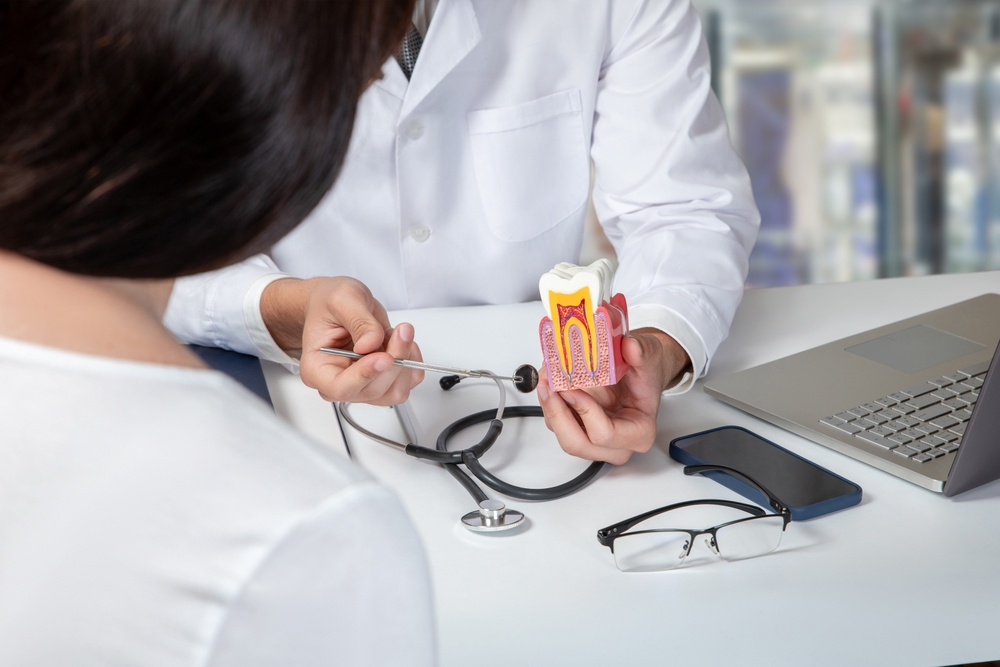
The dental pulp is the soft inner core of your tooth, sitting beneath the hard enamel and dentin layers. It contains nerves, blood vessels, and connective tissue that helped your tooth grow and develop. While the pulp plays a less critical role once a tooth is fully matured, it still senses temperature changes and signals when something is wrong, like the tooth pain that often brings patients into the dental chair.
When tooth decay, bacterial infections, or tooth cracking reaches the pulp, the tissue can become inflamed or infected. This is where problems escalate quickly. Deteriorated pulp cannot heal on its own, and without endodontic treatment, the infection spreads beyond the tooth root into surrounding bone and tissue. That’s why dental professionals don’t treat a root canal as optional. Pulp removal, when necessary, is the most direct way to stop the damage and protect your long-term oral health.

Benefits of Root Canals
Keeping Your Smile Intact Without Prosthetics
Tooth replacement options like implants and bridges are effective, but they’re never quite the same as your natural tooth. A root canal gives your tooth a real chance at a full recovery without introducing artificial dental materials into your mouth. Your natural bite, tooth spacing, and overall dental health are all better preserved when the original tooth stays in place. Endodontic treatment remains one of the most reliable forms of tooth preservation available in modern dentistry.
Clearing Up Chronic Bad Breath at the Source
Persistent bad breath that doesn’t go away with regular oral hygiene is often a sign of bacterial infections brewing beneath the surface. An infected tooth harbors bacteria that release odor-causing compounds no amount of brushing or rinsing can fully address. A root canal removes the deteriorated pulp and eliminates the bacterial source directly. Once the infection is cleared, many patients notice a significant improvement in their breath and overall oral health.
Reducing Referred Pain in Your Head and Neck
Tooth pain from an infected tooth doesn’t always stay localized. The nerves connected to the dental pulp can refer pain to the jaw, ears, temples, and neck, making it difficult to pinpoint the actual source of discomfort. Many patients spend weeks treating what feels like jaw pain or headaches without realizing the root cause is a compromised tooth. A root canal addresses the problem directly, often relieving pain that extends well beyond the mouth.
Lowering Your Risk of Systemic Health Complications
Oral health and overall body health are more connected than most people realize. Untreated bacterial infections in the mouth have been linked in research to cardiovascular issues, diabetes complications, and other systemic conditions. Addressing infection through endodontic treatment isn’t just about saving a tooth. It’s about reducing a source of chronic bacterial activity in your body. Staying on top of dental health is one of the most straightforward ways to support your broader wellbeing.
Getting Back to Your Routine Faster Than You'd Expect
Many patients put off dental treatment assuming the recovery will disrupt their daily life for weeks. In reality, most people return to normal activity within a day or two after the procedure. Dental discomfort following a root canal is typically mild and manageable with over-the-counter relief. Compared to the prolonged disruption of living with an untreated infected tooth, the recovery is far less intrusive than most people anticipate.
Here’s Exactly What Happens When You Get a Crown
Why Choose Tesoro Dental for Your Root Canal
Valencia is a close-knit community, and the dental clinic you trust with something as significant as endodontic treatment should reflect that. Dr. Ahreum Kim, DDS and Dr. Sam Park, DDS built Tesoro Dental with that in mind, a practice where Valencia residents receive attentive, personalized dental care from dental professionals who are genuinely invested in their long-term oral health. Patients here aren’t rushed through appointments or handed off between unfamiliar faces. Every procedure is handled with the same level of care and attention you’d expect from a practice that values lasting relationships over quick visits.
That commitment shows in how the dental team approaches each case. From the first consultation to your final follow-up dental visit, the focus stays on you, your comfort, your dental health goals, and your peace of mind. Whether you’re coming in with severe tooth pain, a referred recommendation, or years of dental anxiety, the experience at Tesoro Dental is designed to meet you where you are. Root canal treatment doesn’t have to feel clinical and impersonal, and for Valencia patients, it doesn’t have to be.

Restore Your Smile With a Root Canal in Valencia
If you’re experiencing tooth pain, our root canal in Valencia can help before the problem worsens. Tooth pain rarely resolves on its own, and the longer an infected tooth goes untreated, the more your overall oral health is at risk. A root canal performed by Dr. Ahreum Kim, DDS, and Dr. Sam Park, DDS at Tesoro Dental is one of the most effective ways to stop that damage, preserve your natural tooth, and get back to living without discomfort. The sooner you act, the simpler the solution tends to be. Book your appointment today, and if you’d like to get a feel for the practice before you come in, you can find Tesoro Dental on social media or reach us directly by phone.
FAQs
Can a tooth that's had a root canal get infected again?
Yes, although it’s uncommon when the procedure is performed correctly and followed up with proper post-treatment care. Reinfection can occur if the dental crown or permanent restoration becomes damaged, allowing bacteria to re-enter the tooth. Maintaining good oral hygiene and attending regular dental checkups significantly reduces this risk. If you notice any returning tooth pain or swelling around a previously treated tooth, contact your dental team promptly.
How is a root canal different from a regular filling?
A filling addresses tooth decay that’s limited to the outer layers of the tooth, the enamel and dentin. A root canal goes deeper, targeting infection or damage that has reached the dental pulp at the tooth’s core. The dental procedure involves removing the pulp, disinfecting the canals, and sealing the tooth to prevent further bacterial infections. It’s a more involved treatment, but it’s the most effective way to save a tooth that a filling alone can’t restore.
Will my tooth look different after a root canal?
In most cases, a dental crown is placed over the treated tooth to restore its appearance and protect its structure. The crown is matched to the shade of your surrounding teeth, so the result blends in naturally with your smile. Without a crown, a tooth that has undergone pulp removal can become brittle over time and may develop tooth discoloration. Covering it properly is an important part of the overall dental treatment and long-term tooth preservation.
Is there anything I should do before my root canal appointment?
There’s no extensive preparation required before your procedure. Eating a normal meal beforehand is fine, since local anesthesia will be used and you may experience some dental discomfort when it wears off later. Let your dental team know about any medications you’re currently taking or any changes in your oral health since your last dental visit. Arriving well-rested and informed about the root canal tends to make the experience much more manageable.
How do I know if my tooth pain is serious enough to call a dentist?
Not all tooth pain signals the need for a root canal, but certain symptoms should never be ignored. Severe or throbbing pain, prolonged sensitivity to temperature, jaw pain, visible tooth cracking, or swelling around a tooth are all signs that the dental pulp may be compromised. Bacterial infections inside a tooth don’t resolve on their own and tend to worsen without dental treatment. When in doubt, scheduling a dental visit sooner rather than later is always the right call.